
The modern world runs on wheels, and tyres are an indispensable part of our daily lives. From cars and trucks to bicycles and airplanes, tyres keep us moving. However, this reliance on rubber-based products comes with its own set of challenges, particularly concerning waste management and environmental sustainability. In this blog, we will explore the lifecycle of tyres, the environmental impact of tyre waste, and innovative solutions that give tyres a second life, turning a potential environmental hazard into valuable resources.

The Lifecycle of Tyres
Tyres are made from a blend of natural and synthetic rubber, along with various chemicals, reinforcing materials like steel and fabric, and fillers such as carbon black. The process of manufacturing a tyre involves several stages:
Compounding: This involves mixing raw rubber with additives to achieve the desired properties. Building: The compounded rubber is then molded into the shape of a tyre, with layers of different materials being added for strength and flexibility. Curing: The molded tyre is vulcanized, a process where heat and pressure are applied to bond the materials together and give the tyre its final shape and durability. Quality Control: Finished tyres are inspected for defects and tested for performance before being shipped to consumers.
Over their lifespan, tyres undergo significant wear and tear, eventually becoming unsafe for use. Traditionally, worn-out tyres were either stockpiled or sent to landfills, contributing to environmental pollution. However, as awareness of environmental issues has grown, so too has the push for more sustainable tyre disposal methods.
Environmental Impact of Tyre Waste
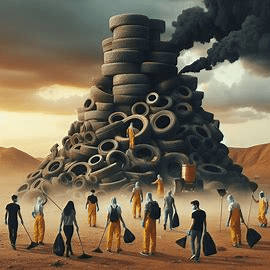
Tyre waste poses significant environmental challenges. In landfills, tyres take up considerable space and can take hundreds of years to decompose. They also present fire hazards, and when burnt, they release toxic chemicals into the atmosphere. Furthermore, improperly disposed tyres can become breeding grounds for disease-carrying pests like mosquitoes.
The environmental impact of tyre waste extends beyond disposal. The production of tyres consumes substantial amounts of natural resources, including petroleum, and generates greenhouse gases. Addressing the full lifecycle of tyres, from production to disposal, is crucial for mitigating their environmental footprint.
Innovative Solutions for Tyre Recycling
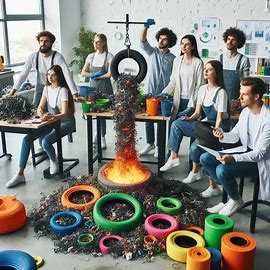
Given the environmental challenges posed by tyre waste, innovative solutions have emerged to give tyres a second life. These solutions range from recycling and repurposing to creating entirely new products from used tyres.
Retreading: One of the most common methods of extending the life of tyres is retreading. This process involves replacing the worn tread on a used tyre with a new one. Retreaded tyres are widely used in commercial transportation, where they offer a cost-effective and environmentally friendly alternative to new tyres. By reusing the existing tyre casing, retreading conserves raw materials and reduces waste.
Crumb Rubber: Another popular method of recycling tyres is to convert them into crumb rubber. This involves grinding up used tyres into small particles, which can then be used in various applications. Crumb rubber is commonly used as an additive in asphalt for road construction, providing enhanced durability and noise reduction. It is also used in playground surfaces, athletic tracks, and as a raw material for new rubber products.
Pyrolysis: Pyrolysis is a thermal decomposition process that breaks down tyres at high temperatures in the absence of oxygen. This process converts tyres into valuable byproducts such as oil, gas, and carbon black. The oil can be used as a fuel or further refined into other products, while the carbon black can be used in the manufacture of new tyres or as a pigment in inks and coatings. Pyrolysis offers a promising solution for converting tyre waste into useful materials and energy.
Devulcanization: Devulcanization is a process that reverses the vulcanization of rubber, allowing it to be reused in new products. This involves breaking the sulfur bonds in the rubber, making it pliable again. Devulcanized rubber can be used to produce a variety of rubber products, including new tyres, seals, and gaskets. Advances in devulcanization technology are making it increasingly feasible to recycle tyres in this way, offering a closed-loop solution for rubber waste.
Creative Repurposing: Beyond recycling, tyres can be creatively repurposed into new products. Old tyres have been transformed into everything from furniture and flooring to art and fashion accessories. This not only diverts tyres from landfills but also fosters innovation and creativity in product design. Tyre-derived products can be found in homes, gardens, and public spaces, demonstrating the versatility of this material.
Case Studies: Successful Tyre Recycling Initiatives
Several initiatives around the world have demonstrated the potential for tyre recycling to make a significant environmental impact.
- The Scandinavian Model: Scandinavian countries have been at the forefront of tyre recycling. In Sweden, for example, nearly 100% of end-of-life tyres are collected and processed. A significant portion is used in energy recovery, where tyres are burned in cement kilns and power plants to generate energy. The remaining tyres are recycled into new products, such as rubber mats and playground surfaces. The success of this model is attributed to stringent regulations, effective collection systems, and strong collaboration between government, industry, and consumers.
- The Indian Initiative: India faces a massive challenge with tyre waste, given its rapidly growing automotive sector. In response, several companies have emerged to tackle the problem. One notable example is Green Rubber, which uses a proprietary devulcanization process to recycle used tyres into new rubber products. Another initiative, Tyrelessly, focuses on the collection and recycling of end-of-life tyres, converting them into fuel and other byproducts. These efforts are helping to address the tyre waste problem in India while creating economic opportunities.
- The Canadian Approach: Canada has implemented a comprehensive Extended Producer Responsibility (EPR) program for tyres. Under this program, tyre manufacturers and importers are responsible for the collection and recycling of used tyres. The program has achieved impressive results, with a high percentage of tyres being recycled into new products, such as rubber mulch, athletic surfaces, and building materials. The Canadian approach highlights the importance of regulatory frameworks in driving sustainable waste management practices.
Challenges and Future Directions
While significant progress has been made in tyre recycling, several challenges remain. One major challenge is the cost of recycling processes, which can be higher than the cost of producing new tyres. Advances in technology and economies of scale are needed to make recycling more economically viable.
Another challenge is the contamination of recycled rubber with other materials, such as metal and fabric, which can complicate the recycling process. Improved methods for separating and purifying recycled rubber are essential for producing high-quality recycled products.
Despite these challenges, the future of tyre recycling looks promising. Continued research and innovation are driving the development of new recycling technologies and applications. Governments and industry stakeholders are increasingly recognizing the importance of sustainable waste management practices and are implementing policies and programs to support tyre recycling.
Conclusion
The journey of rubber-based products, particularly tyres, from production to disposal, presents significant environmental challenges. However, innovative solutions are emerging to give tyres a second life, transforming them from waste into valuable resources. Through retreading, crumb rubber production, pyrolysis, devulcanization, and creative repurposing, tyres can be recycled and reused in a variety of applications. Successful initiatives around the world demonstrate the potential for tyre recycling to make a positive environmental impact. As technology advances and awareness grows, the vision of a circular economy for tyres is becoming a reality, offering a sustainable future for rubber-based products.
 Waste Management Services