
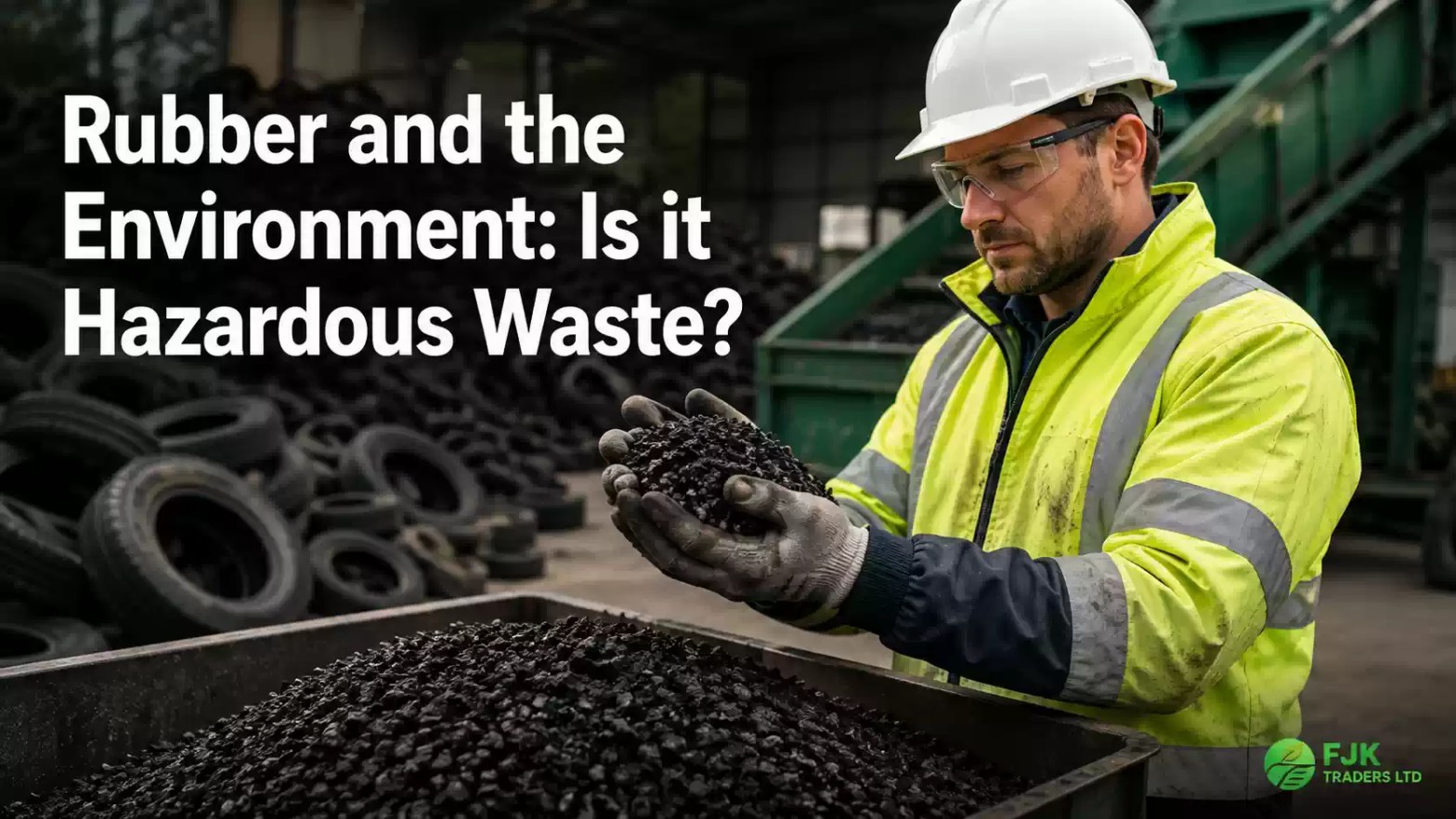
Is Rubber Hazardous Waste? UK Rubber Disposal and Recycling Guide
Rubber is used throughout modern industry in tyres, conveyor belts, hoses, seals, flooring, footwear, machinery, automotive components and thousands of everyday products. Its durability and flexibility make it commercially valuable, but those same characteristics can create difficulties when the material becomes waste.
Businesses searching for rubber disposal UK services often ask whether rubber is hazardous waste, whether it can be recycled and whether it can be placed in a normal commercial waste container. There is no single answer that applies to every rubber product.
Rubber is not automatically hazardous waste. Its classification depends on its composition, source, condition, contamination and any hazardous substances it contains. Clean cured rubber offcuts, contaminated rubber seals, used tyres, rubber-coated textile cord and unvulcanised rubber compound may all require different waste-management routes.
Correct rubber waste management therefore begins with identifying the material before arranging collection, recycling or disposal.
Important: This guide focuses mainly on waste managed in England. Businesses operating in Scotland, Wales or Northern Ireland should also check the requirements of the appropriate national environmental regulator.
What Is Rubber Waste?
Rubber waste includes any discarded material made wholly or partly from natural rubber, synthetic rubber or another elastomeric compound.
Common examples include:
- Unvulcanised rubber compound
- Cured rubber production offcuts
- End-of-life tyres
- Rubber-coated steel or textile cord
- Conveyor belts
- Industrial hoses
- Rubber sheets and flooring
- EPDM roofing membrane
- Silicone rubber components
- Neoprene and nitrile products
- Rubber seals and gaskets
- Redundant or out-of-specification stock
- Rubber crumb and granulated rubber
Natural Rubber
Natural rubber is primarily derived from latex harvested from rubber trees. It is valued for elasticity, tensile strength and resistance to fatigue.
Although natural rubber originates from a renewable biological source, finished natural-rubber products are usually formulated with fillers, oils, pigments, stabilisers and curing chemicals. A finished rubber product should therefore not be assumed to be biodegradable or environmentally harmless simply because it contains natural rubber.
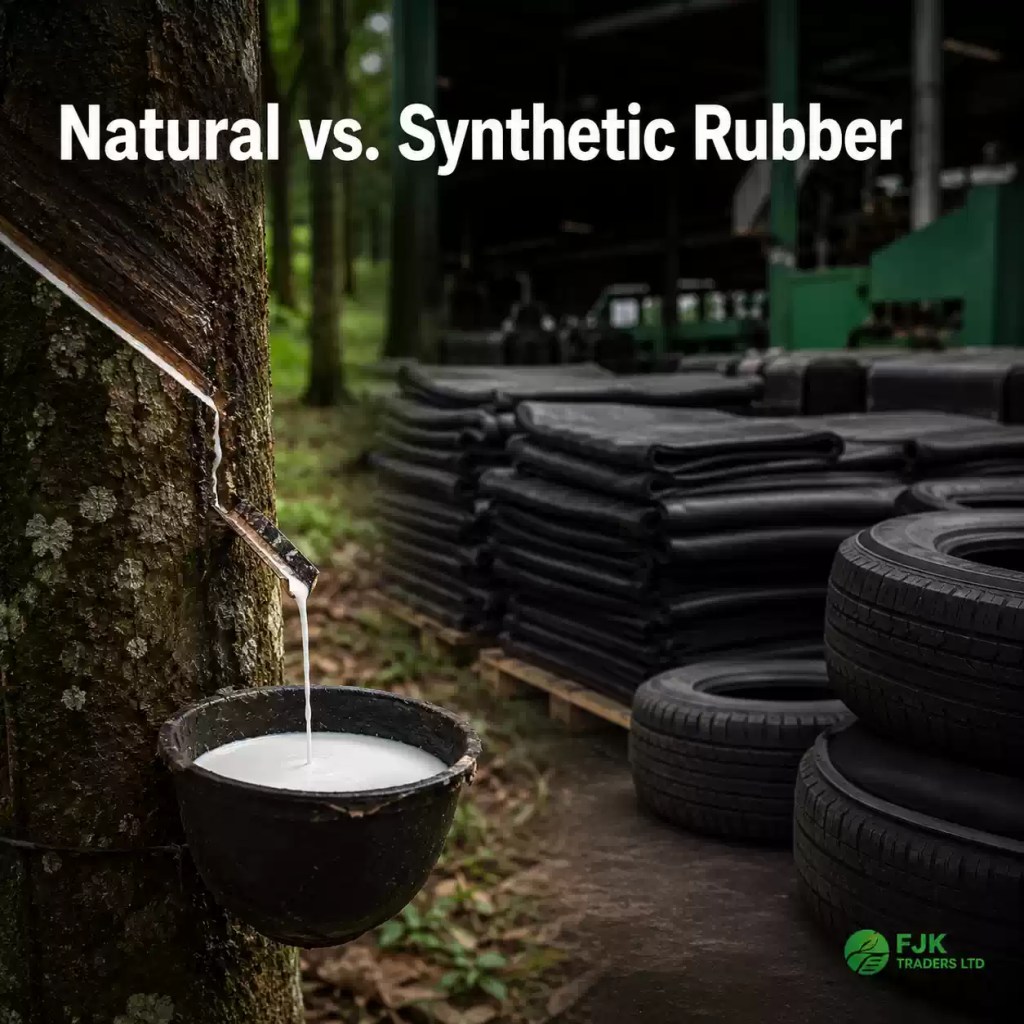
Synthetic Rubber
Synthetic rubber is manufactured from chemical feedstocks and includes materials such as:
- Styrene-butadiene rubber, or SBR
- Nitrile rubber, or NBR
- EPDM
- Butyl rubber
- Neoprene
- Silicone rubber
Different synthetic rubber compounds are designed for different levels of heat resistance, oil resistance, flexibility, weather resistance and durability. These variations affect their reuse, recycling and disposal options.
Vulcanised and Unvulcanised Rubber
Unvulcanised rubber, also known as uncured rubber, has not completed the curing process. It may remain soft, tacky and capable of being blended into a compatible manufacturing process.
Vulcanised rubber has undergone curing that creates cross-links between its polymer chains. Vulcanisation gives rubber its strength and elasticity, but it also means the material cannot normally be melted and reshaped in the same way as many thermoplastics.
This difference is one of the main reasons why rubber waste processing requires specialist equipment and technical assessment.
Is Rubber Classified as Hazardous Waste?
Rubber is not automatically classified as hazardous waste in the UK. The correct classification depends on the waste’s composition and whether it displays any hazardous properties.
In England, waste producers should use the Environment Agency’s WM3 technical guidance to determine the appropriate List of Waste code and assess whether the material contains hazardous substances above applicable thresholds. The waste producer must provide an accurate description when transferring the waste to another organisation.
Rubber waste may need detailed assessment when it contains or has been contaminated by:
- Oil, diesel or other fuels
- Solvents
- Adhesives or resins
- Heavy metals
- Hazardous plasticisers
- Flame-retardant chemicals
- Curing agents and accelerators
- Process chemicals
- Unknown industrial residues
- Persistent organic pollutants
- Chemicals from medical or laboratory use
The assessment may involve reviewing safety data sheets, product formulations, manufacturing records, contamination history and laboratory test results.
A rubber product’s colour, smell or industrial origin is not enough to determine whether it is hazardous. Classification should be based on evidence about the actual waste.
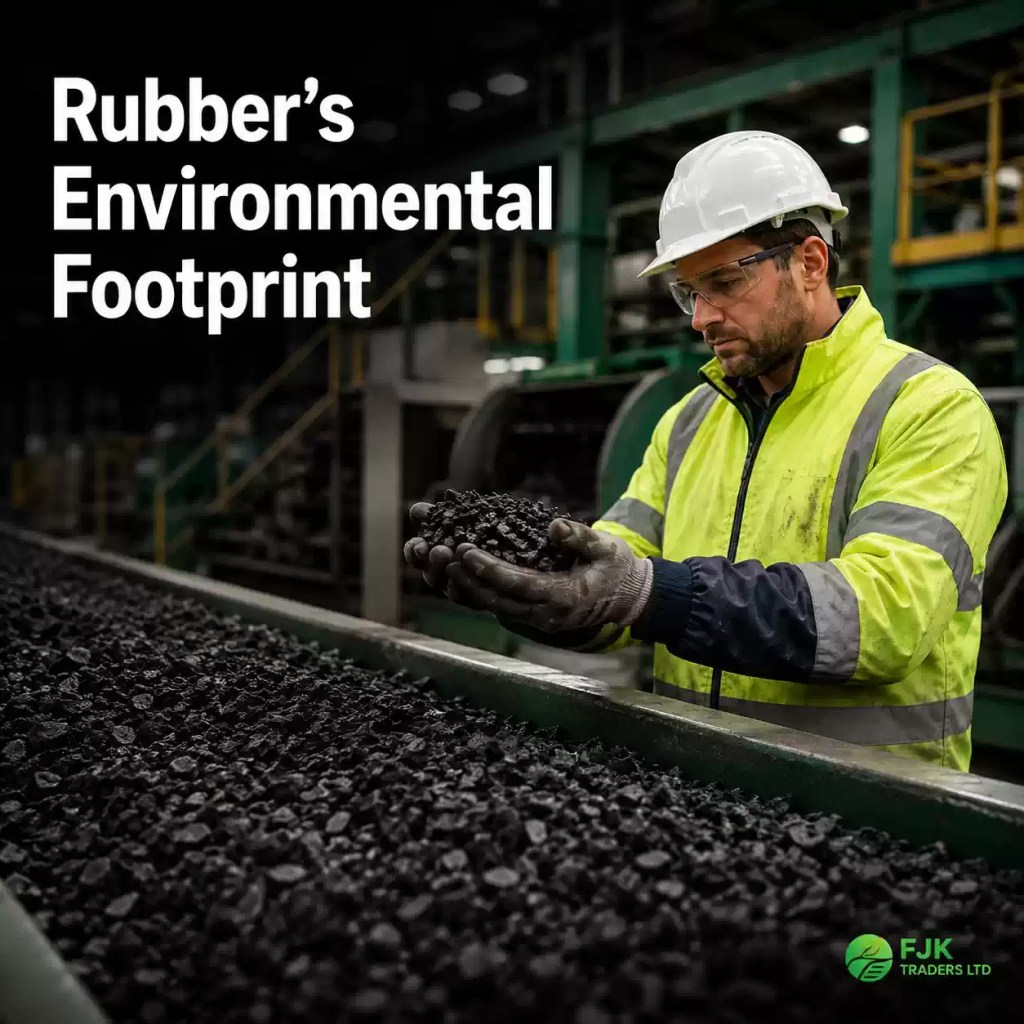
Are Waste Tyres Hazardous?
Standard end-of-life tyres are generally managed under waste code 16 01 03. This code does not carry the asterisk used to identify hazardous waste entries.
Shredded or granulated end-of-life tyres produced by authorised treatment may be classified under waste code 19 12 04, depending on the material and treatment process. The Environment Agency lists these codes within its guidance for mechanical treatment of end-of-life tyres.
However, tyres contaminated with hazardous chemicals, oil or other substances may require a separate assessment. The correct classification must always reflect the actual condition of the waste.
How Should Rubber Be Disposed Of?
One of the most common Google “People also ask” questions is: How should rubber be disposed of?
Commercial rubber should be identified, separated, classified and transferred through an authorised waste-management route. It should not normally be mixed with general waste before the receiving contractor has confirmed that it can accept the material.
1. Identify the Rubber
Record as much information as possible, including:
- Polymer or compound type
- Whether it is cured or uncured
- Manufacturer and grade
- Source of the waste
- Physical form
- Approximate quantity
- Contamination level
- Packaging
- Storage condition
- Available safety data
For example, “rubber scraps” is too broad for a specialist recycler to assess accurately.
A more useful description would be:
Clean, unvulcanised EPDM production offcuts, free from oil and general factory waste, packaged on lined pallets.
Accurate information helps the contractor determine whether the rubber can be reused, reprocessed, granulated, devulcanised or sent for another authorised recovery process.
2. Separate Different Waste Streams
Clean material should be kept separate from contaminated or mixed material.
Businesses may need different containers for:
- Clean unvulcanised compound
- Cured rubber offcuts
- Rubber with steel reinforcement
- Rubber with textile reinforcement
- Oil-contaminated rubber
- Mixed rubber polymers
- General production waste
Proper segregation is one of the most effective rubber scrap management solutions. It can improve recycling potential, simplify waste classification and reduce unnecessary treatment costs.
3. Classify the Waste
The business producing the waste is responsible for describing it correctly.
A proper waste description should include:
- The relevant waste code
- The type of rubber
- The source or process that produced it
- Its physical form
- Any contamination
- Whether it is hazardous
- The approximate quantity
The receiving facility must have the appropriate environmental authorisation to accept that waste code and material type.
4. Store Rubber Safely
Rubber waste should be stored securely so that it cannot escape, contaminate drainage systems or create an uncontrolled fire risk.
Appropriate controls may include:
- Covered or sealed containers
- Impermeable surfaces
- Clear waste labels
- Separation from ignition sources
- Controlled stack sizes
- Safe access for inspection
- Protection from oil and chemical contamination
- Rotation of stock to prevent excessive accumulation
The Environment Agency treats rubber and tyres as combustible waste when assessing fire-prevention arrangements at permitted facilities. Its guidance covers whole tyres, tyre bales, tyre shred, crumb, fibre and other natural or synthetic rubber waste.
Unvulcanised rubber may also require release film, sealed packaging and protection from heat, sunlight, dirt and moisture.
5. Use a Registered Waste Carrier
Before arranging collection, check that the collector is registered as a waste carrier, broker or dealer.
You should also verify that the destination site is authorised to accept and process your specific waste. Using a registered carrier does not remove the waste producer’s duty to check where the material is going.
The waste duty of care requires businesses to take reasonable steps to prevent unauthorised handling, illegal disposal or the escape of waste.
6. Complete the Correct Documentation
For non-hazardous commercial waste moved from a business premises, a waste transfer note or another document containing the same required information is normally needed.
When hazardous waste is transported, a hazardous-waste consignment note must accompany it until it reaches its final destination.
As of August 2026, the Digital Waste Tracking service is live, but operators are still required to maintain existing waste transfer notes, consignment notes and other current reporting records. The Digital Waste Tracking Regulations in England are scheduled to come into force on 1 October 2026.
Can Rubber Be Recycled?
Yes. Many types of rubber can be reused, recycled or recovered, although not every rubber waste stream can use the same process.
The most suitable option depends on:
- Rubber polymer
- Cure condition
- Product age
- Contamination
- Reinforcement
- Particle size
- Available volume
- Consistency of supply
- Technical requirements of the new product
Reuse and Return to Production
Unused or surplus rubber may retain more value than processed waste.
Potential options include:
- Returning material to the original compounder
- Reselling redundant stock
- Reusing offcuts in the same production process
- Using material in a lower-specification product
- Reusing suitable tyre casings through retreading
- Reconditioning rubber mats, sheets or protective products
The UK waste hierarchy gives priority to preventing waste, followed by preparing products for reuse, recycling, other recovery and disposal. Businesses should therefore examine genuine reuse opportunities before choosing landfill or destruction.
Material should only be marketed as a reusable product when it has a genuine specification, a realistic market and a confirmed intended use. Calling unwanted waste a “product” does not automatically remove waste-management responsibilities.
Mechanical Rubber Recycling
Cured rubber may be processed through:
- Cutting
- Shredding
- Granulation
- Grinding
- Pulverisation
- Steel separation
- Textile separation
The resulting rubber crumb or granulate may be used in suitable flooring products, moulded components, mats, impact-control materials and selected construction applications.
Environment Agency rules for tyre-treatment facilities recognise activities such as sorting, baling, cutting, shredding, shaving, granulating, repairing and retreading when undertaken under the appropriate authorisation.
Devulcanisation and Reclaiming
Devulcanisation is a specialist process that attempts to break selected cross-links in cured rubber.
Methods may involve:
- Mechanical shearing
- Controlled heat
- Chemical treatment
- Microwave processing
- Combined thermo-mechanical treatment
The recovered material may then be blended into compatible rubber compounds. Its performance depends on the original polymer, the level of degradation, processing conditions and the quality requirements of the final product.
Energy and Thermal Recovery
Certain rubber waste may be accepted by authorised facilities for controlled thermal recovery or specialist treatment.
This must not be confused with open burning. Rubber should never be burned in the open or processed through unapproved equipment. Uncontrolled rubber fires can generate dense smoke, contaminated firewater and difficult fire-control conditions.
Why Is Rubber Not Recyclable in Normal Recycling Bins?
Rubber is recyclable, but it is generally unsuitable for normal household plastic-recycling systems.
The main reason is vulcanisation. Once rubber is cured, it cannot simply be melted and reshaped like conventional thermoplastic packaging.
Other rubber recycling challenges include:
- Different polymers mixed in one product
- Steel or textile reinforcement
- Adhesives and coatings
- Carbon black and mineral fillers
- Oils and plasticisers
- Unknown chemical formulations
- Heat and weather degradation
- Inconsistent waste volumes
- Contamination with general waste
These factors explain why specialist rubber recycling UK facilities are required.
Can Rubber Be Recycled With Plastic?
Rubber and plastic should not normally be placed in the same recycling stream.
Although some finished products contain both materials, rubber and thermoplastics usually require different temperatures, separation methods and processing equipment. Mixed rubber-plastic products may need specialist mechanical separation or may have limited recycling outlets.
Businesses should identify each component before asking a contractor to assess the material.
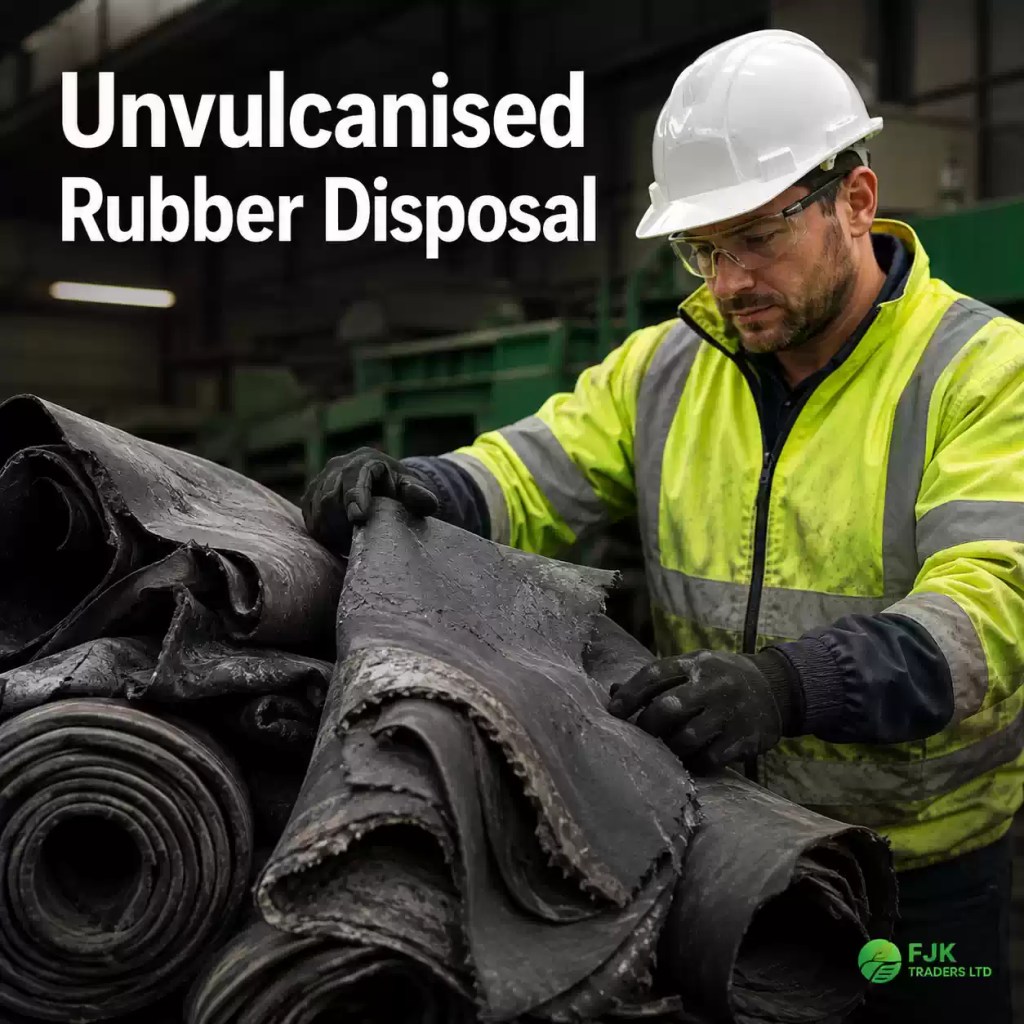
Unvulcanised Rubber Disposal and Recycling
Unvulcanised rubber can be a valuable industrial waste stream because it has not completed the curing process.
Clean and consistent material may be suitable for:
- Reblending into compatible compound
- Returning to the original manufacturer
- Specialist reclaiming
- Production of lower-specification goods
- Controlled recycling at an authorised facility
The material becomes more difficult to recover when it contains mixed polymer grades, fabric, metal, dirt, oil, cured rubber or unknown chemicals.
Information Needed for an Assessment
A recycler or rubber scrap buyer will normally need:
- Compound or polymer type
- Cure condition
- Manufacturer and grade
- Quantity
- Supply frequency
- Sheet, roll or lump dimensions
- Photographs
- Packaging details
- Contamination percentage
- Safety data sheets
- Collection postcode
- Loading arrangements
Providing this information at the beginning can reduce delays and help determine whether recovery is technically and commercially possible.
What Affects Unvulcanised Rubber Disposal Cost?
There is no fixed unvulcanised rubber disposal cost.
Pricing normally depends on:
- Total weight
- Polymer type
- Material consistency
- Contamination
- Hazardous classification
- Packaging
- Loading method
- Collection distance
- Frequency of collections
- Testing requirements
- Recovery or resale value
Clean, separated and correctly labelled material may be less expensive to manage than mixed waste because it is easier to inspect and may retain manufacturing value.
Environmental Impact of Rubber Waste
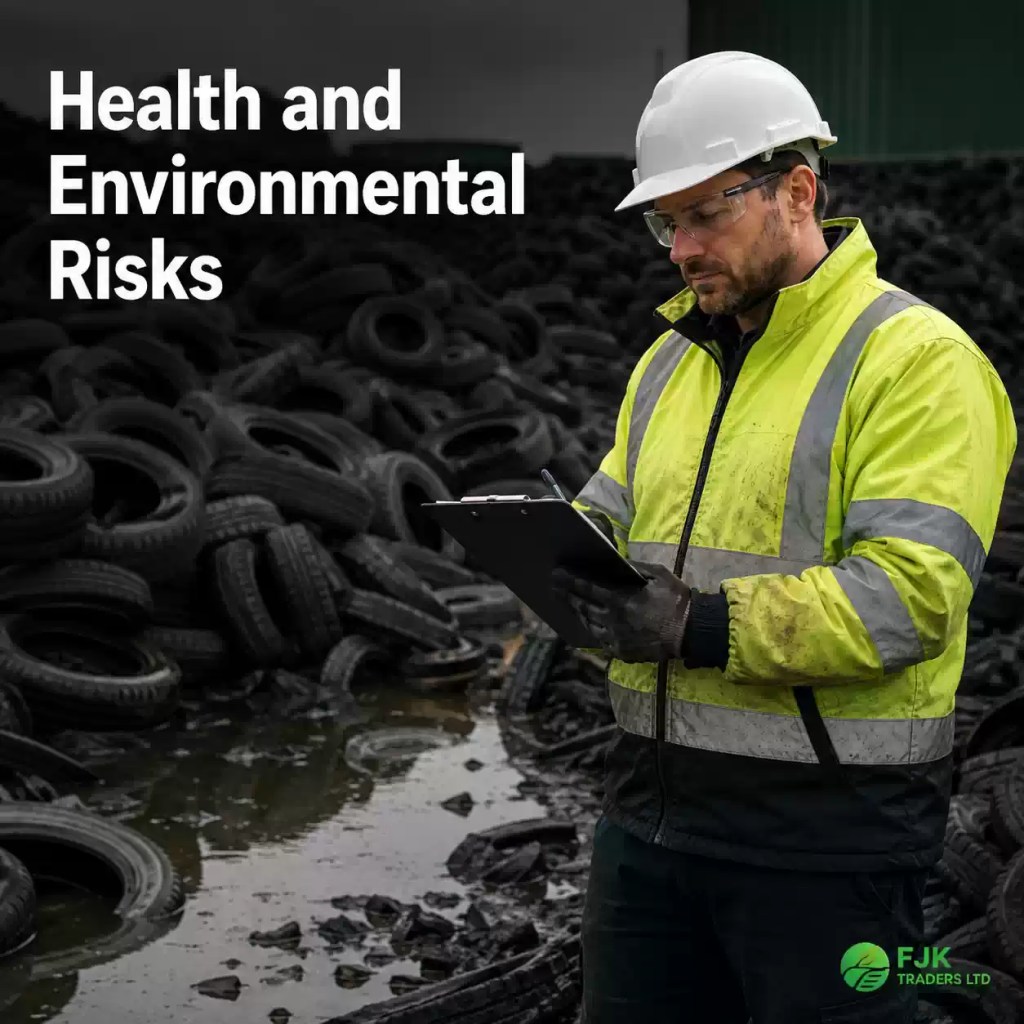
Rubber products are designed to resist water, heat, abrasion and physical stress. These benefits provide long service life but can cause environmental problems when rubber is dumped, stockpiled or poorly managed.
Landfill and Illegal Dumping
Whole and shredded used tyres are generally prohibited from landfill disposal in England, with limited exceptions for specific tyre categories. End-of-life tyres should instead be directed towards legitimate reuse, recycling or recovery routes.
Reducing landfill waste with rubber recycling can also preserve material value and reduce the amount of bulky waste requiring long-term management.
Fire Risks
Large tyre and rubber stockpiles can create a significant fire-management challenge.
A fire may spread through tightly packed material and generate large quantities of smoke and contaminated runoff. Waste sites accepting substantial volumes of rubber may require detailed fire-prevention controls as part of their environmental permit.
For businesses, practical risk management in rubber recycling includes limiting accumulation, controlling ignition sources, maintaining safe separation distances and ensuring emergency access.
Tyre-Wear Particles
Rubber’s environmental impact is not limited to end-of-life tyres.
As tyres wear against road surfaces, they release tyre-wear particles. A 2025 Environment Agency assessment described these particles as microplastics and examined the potential environmental risks from chemicals that may leach from them. Government reporting has estimated that substantial quantities of tyre-wear microplastics are generated in the UK and can enter surface waters.
This issue highlights why sustainable rubber manufacturing must consider the full product lifecycle, including production, use and end-of-life recovery.
Is Rubber Toxic?
Rubber is not automatically toxic during normal use. However, rubber products are complex formulations and may contain additives that require controlled handling.
Potential concerns depend on:
- The exact chemical formulation
- Whether the rubber is damaged or degraded
- Contamination during use
- Dust generated during grinding
- Fumes generated during heating
- Chemical leaching
- Uncontrolled burning
Workers handling rubber waste should follow relevant safety data, workplace risk assessments and dust-control procedures.
The question should not simply be “Is rubber toxic?” A more useful assessment asks which rubber compound is present, what it contains and how it will be stored or processed.
Sustainable Rubber Recycling Solutions for Businesses
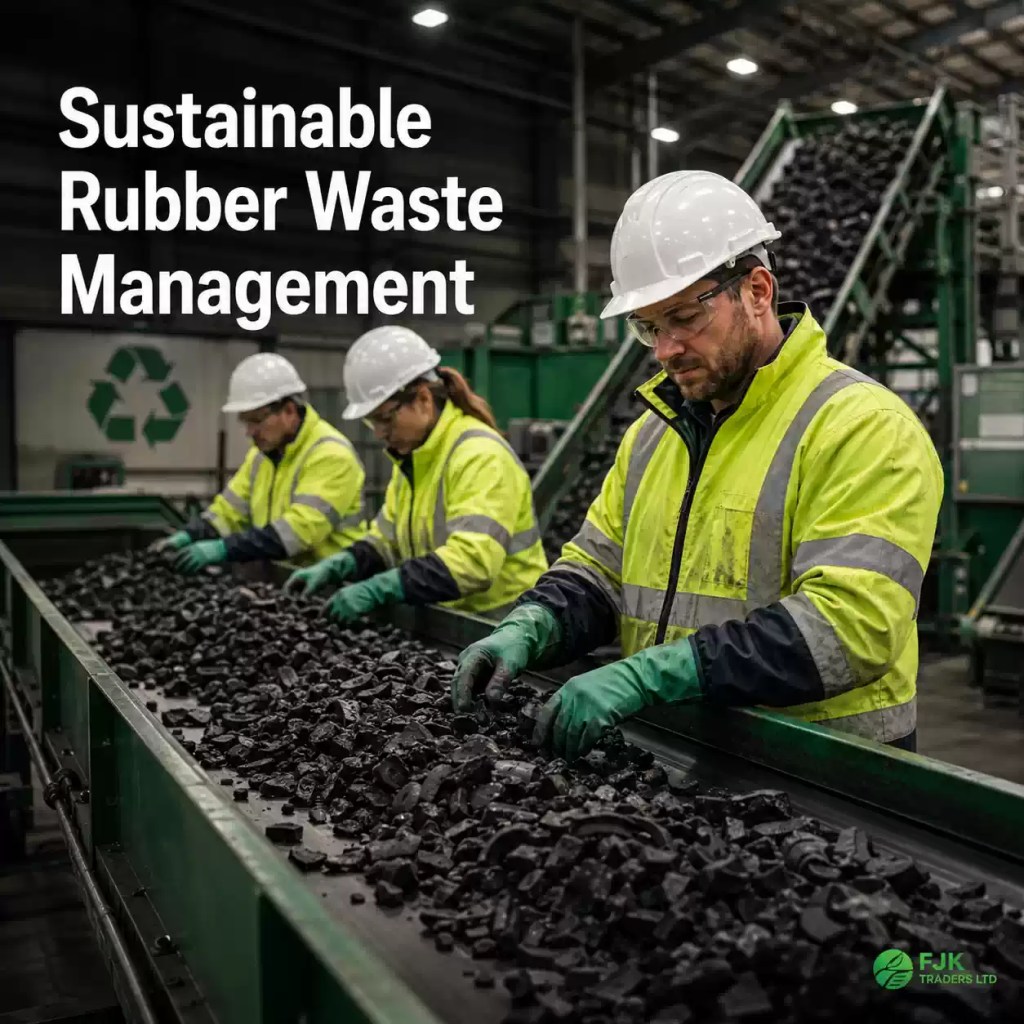
Effective rubber waste diversion from landfills requires a planned system rather than occasional disposal.
Complete a Rubber Waste Audit
Record every rubber waste stream produced by the business, including:
- Annual tonnage
- Polymer type
- Cure condition
- Contamination
- Packaging
- Current disposal route
- Collection frequency
- Disposal cost
This can reveal materials that should be separated or assessed for recovery.
Separate Rubber at the Source
Place clearly labelled containers near the production area so clean compound is not mixed with metal, cardboard, oil, timber or general waste.
Source segregation is usually more effective than attempting to separate heavily mixed material later.
Retain Technical Records
Keep safety data sheets, batch details, supplier information and product specifications available.
This information can help overcome rubber recycling challenges and reduce the need for unnecessary laboratory analysis.
Review Contractors and Destinations
Check:
- Waste carrier registration
- Environmental permit or exemption
- Accepted waste codes
- Treatment method
- Final destination
- Export arrangements, where relevant
- Recovery evidence
From July 2026, new information requirements apply to certain waste exports from England under Article 18 controls, reinforcing the need for accurate records and destination checks.
Maintain Traceability
Retain:
- Waste transfer notes
- Consignment notes
- Weighbridge tickets
- Collection photographs
- Laboratory reports
- Invoices
- Recovery or recycling certificates
Traceability allows a business to demonstrate responsible rubber waste management and respond effectively to customer, regulator or environmental-audit enquiries.
Frequently Asked Questions
How should rubber be disposed of?
Rubber should be identified, segregated, classified and transferred through a registered carrier to a facility authorised to accept the relevant waste. Reuse and recycling should be assessed before disposal.
Why is rubber not recyclable?
Rubber is recyclable, but vulcanised rubber cannot be remelted like conventional plastic. Mixed polymers, fillers, steel, textile reinforcement and contamination can also make recycling more complex.
How do we recycle rubber?
Depending on the material, rubber may be reused, retreaded, shredded, granulated, reclaimed, devulcanised or sent for another authorised recovery process.
Can unvulcanised rubber be recycled?
Yes. Clean, well-identified unvulcanised rubber may be suitable for reblending, reclaiming or manufacturing lower-specification rubber products.
Can rubber go in a general waste skip?
Only when the waste contractor and receiving facility are authorised to accept it and the rubber has been accurately described. Specialist or contaminated industrial rubber should be assessed separately.
Is tyre disposal free?
Commercial tyre collection is not automatically free. Charges depend on quantity, type, condition, collection location and the receiving facility. Businesses should be cautious of unverified “free tyre disposal” services and confirm the carrier’s registration and final destination.
How do I find rubber recycling near me?
Find a registered waste contractor or specialist rubber recycler that accepts your exact type of material. Before booking, confirm its waste carrier registration, accepted waste codes and destination facility.
Are end-of-life tyres hazardous waste?
Standard end-of-life tyres are generally managed as non-hazardous waste under code 16 01 03. Tyres contaminated with hazardous substances may require additional classification.
How much does rubber disposal cost?
Rubber disposal cost depends on weight, polymer, cure condition, contamination, packaging, transport distance, testing requirements and whether the material has a viable recycling or recovery value.
Conclusion
Rubber is not automatically hazardous waste, but neither should it be treated as ordinary general rubbish without assessment.
Responsible rubber disposal UK begins by identifying the polymer, cure condition, contamination and source of the material. Businesses should then classify the waste correctly, separate recoverable rubber, use registered contractors and confirm that the receiving facility is authorised.
Unvulcanised compound, cured rubber offcuts, rubber-coated fabric, tyre cord and redundant rubber stock may still have recycling or recovery potential. Providing accurate technical information allows processors to identify the most appropriate route and can reduce both environmental impact and disposal costs.
For an initial commercial assessment, provide FJK Traders Ltd with the material type, cure condition, estimated quantity, collection city, photographs, packaging details and available safety data.

