
Unvulcanised Rubber Compound Waste Collection and Recovery
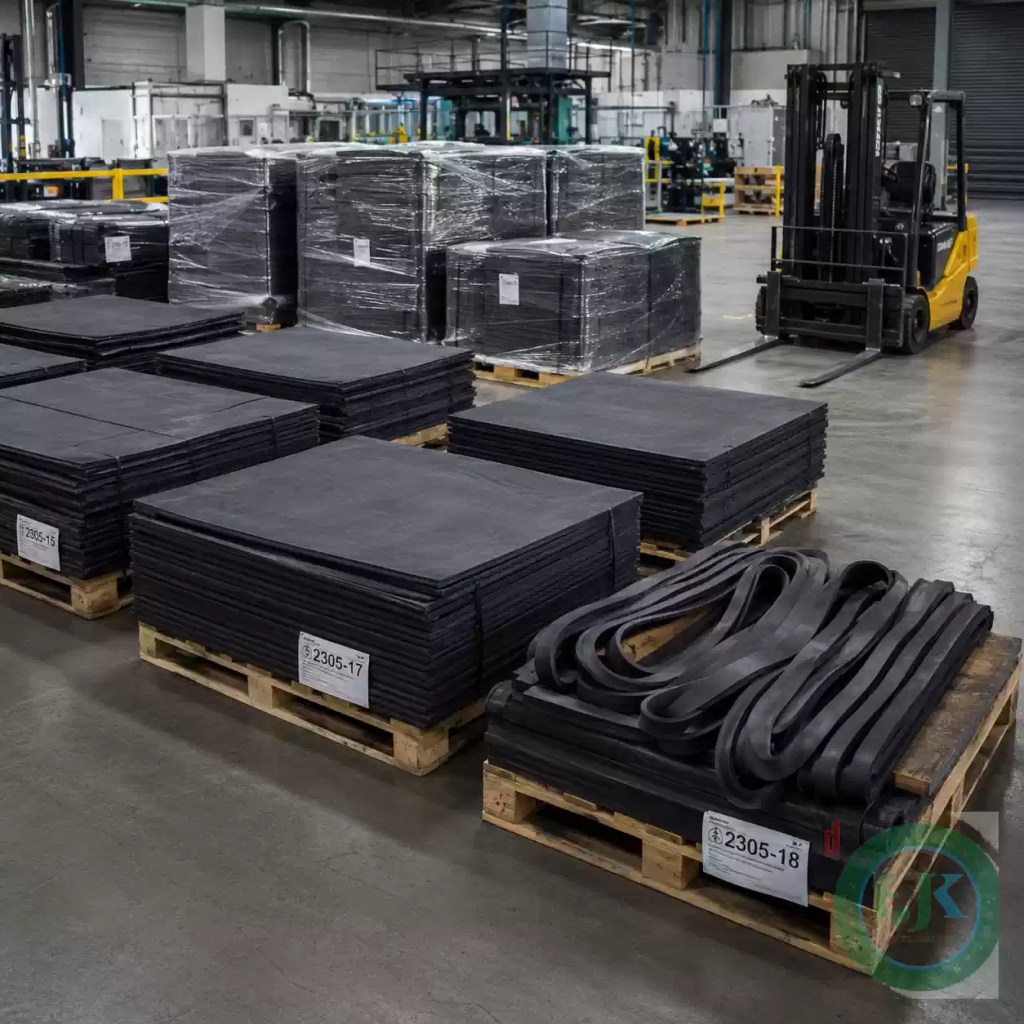
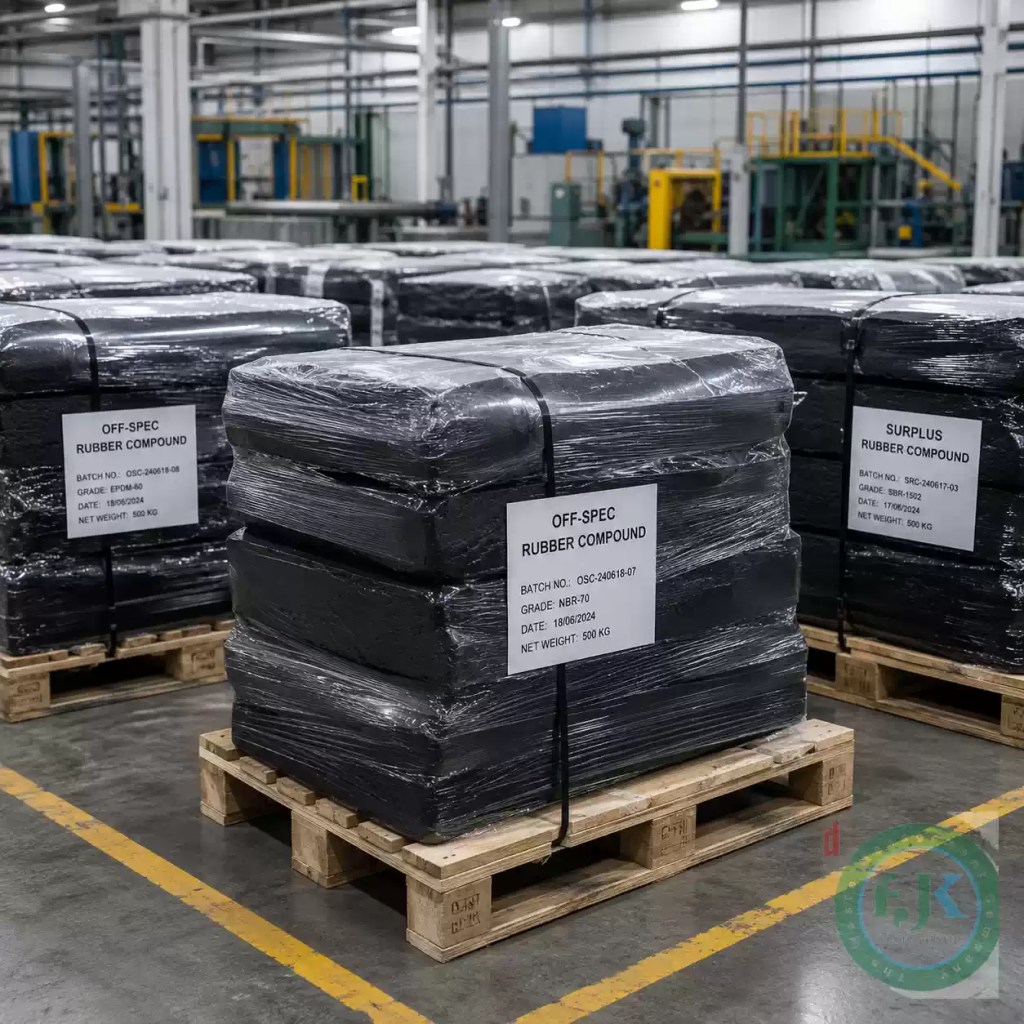
FJK Traders Ltd provides practical solutions for manufacturers and industrial businesses holding unvulcanised rubber compound waste. We assess unvulcanised rubber compound waste, off-spec batches, production trim, surplus stock and rejected uncured rubber to identify suitable collection, reuse, recovery or responsible onward-processing routes.
Our service is intended for tyre factories, rubber compounders, automotive suppliers, technical rubber manufacturers and other industrial businesses that need a reliable solution for redundant rubber materials. Every enquiry is reviewed individually according to the material specification, quantity, condition, packaging, contamination level and collection location.
Holding surplus or rejected rubber compound?
Send us material photographs, specifications, approximate quantity and collection location for an initial assessment.
Call: +44 1706 632290
Email: info@fjktraders.co.uk
Industrial Solutions for Uncured Rubber Compound
Unvulcanised rubber compound is rubber material that has been mixed and prepared but has not yet completed the vulcanisation or curing process. It may arise during manufacturing because of formulation changes, production errors, equipment cleaning, quality-control rejection, excess purchasing or expired stock.
Unlike many finished rubber products, suitable uncured compound may retain potential for reprocessing, blending, alternative manufacturing use or specialist material recovery. However, its suitability depends heavily on the formulation, storage history, age and level of contamination.
FJK Traders Ltd helps industrial waste producers assess materials before collection or onward movement. We do not treat every rubber material as identical. A technical and commercial review is needed to determine whether the material may be suitable for recovery or whether another authorised management route is required.
Types of Rubber Compound We Assess
We consider enquiries involving the following forms of unvulcanised and surplus rubber material.
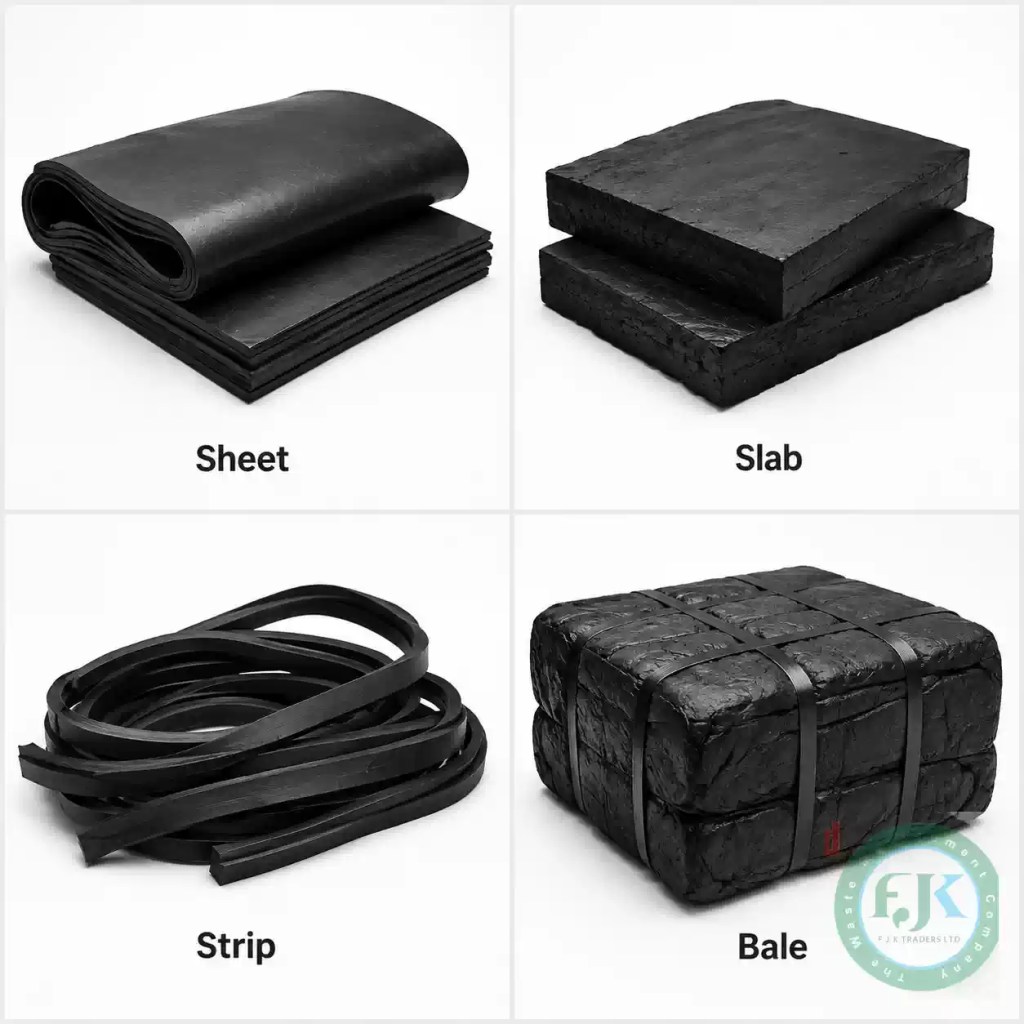
Uncured Rubber Compound
This may include mixed rubber that has not yet undergone the curing process. It may be supplied as sheets, slabs, strips, batches, blocks or production trim.
Off-Spec Production Batches
A rubber batch may be rejected because it does not meet the intended hardness, colour, viscosity, cure characteristics, formulation or customer specification.
Off-spec does not always mean that the material has no potential use. Some batches may be suitable for an alternative application or controlled recovery route after assessment.
Surplus Rubber Compound
Businesses may hold unused material following:
- Production schedule changes
- Cancelled customer orders
- Formula changes
- Excess purchasing
- Factory relocation
- Product-line discontinuation
- Warehouse clearance
- Business restructuring
We assess both one-off surplus quantities and recurring industrial waste streams.
Rubber Compound Production Waste
Production processes can generate:
- Mixer residues
- Mill trim
- Extrusion trim
- Calendering waste
- Sheet edges
- Start-up material
- Changeover waste
- Rejected production runs
- Factory floor sweepings
- Test batches
The material must be clearly described because clean production trim may have different recovery options from mixed or contaminated sweepings.
Rejected Rubber Compound
Rejected rubber compound may result from laboratory testing, quality-control failure, incorrect formulation or customer specification changes.
When contacting FJK Traders, explain why the material was rejected and provide any available technical data.
Expired or Redundant Stock
Stored rubber compound may become redundant because it has passed an internal shelf-life date or is no longer required.
The original production date, storage conditions and packaging should be supplied wherever available.
Material Forms That May Be Considered
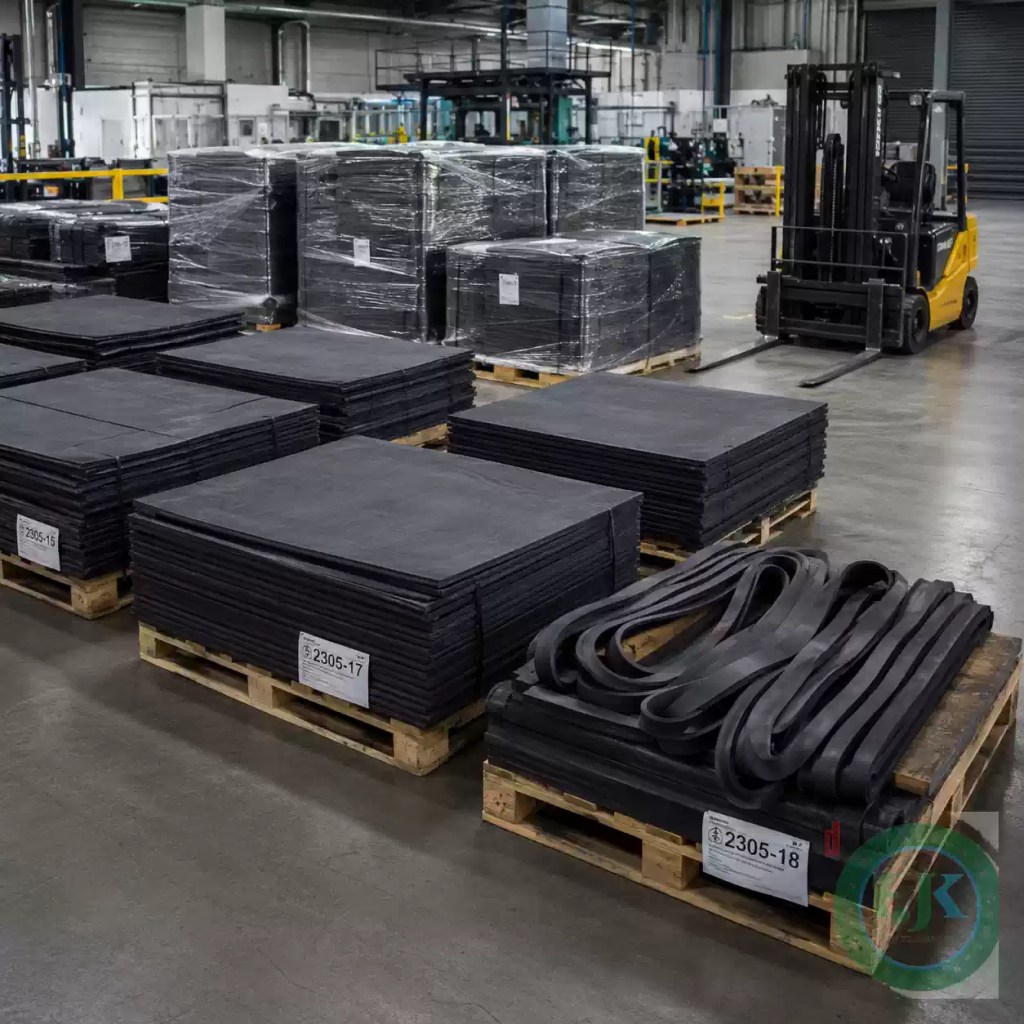
Depending on composition and condition, enquiries may involve:
- Rubber sheets
- Rubber slabs
- Rubber strips
- Rubber blocks
- Baled material
- Palletised batches
- Boxed rubber compound
- Bagged production trim
- Rolls of uncured rubber
- Mixed factory batches
- Clean production offcuts
- Surplus packaged compound
Acceptance is not automatic. The material must first be reviewed against available collection, recovery and onward-processing options.
Industries We Support
Our unvulcanised rubber compound waste service is designed for industrial and commercial waste producers rather than household waste.
Tyre Manufacturing Plants
Tyre production can generate uncured compound, sidewall compound, tread compound, skim compound, calendering trim and rejected factory batches.
Material composition and reinforcement content must be disclosed before assessment.
Rubber Compound Manufacturers
Compounders may need a route for surplus formulations, laboratory batches, colour-change waste, production errors or discontinued grades.
Automotive Component Manufacturers
Businesses producing seals, hoses, anti-vibration components, mats, belts and moulded rubber products may generate uncured trim and rejected compound.
Technical Rubber Manufacturers
We can review material from businesses manufacturing:
- Industrial seals
- Gaskets
- Conveyor components
- Rubber sheets
- Flooring
- Protective components
- Moulded products
- Engineering rubber parts
Our Rubber Compound Waste Assessment Process
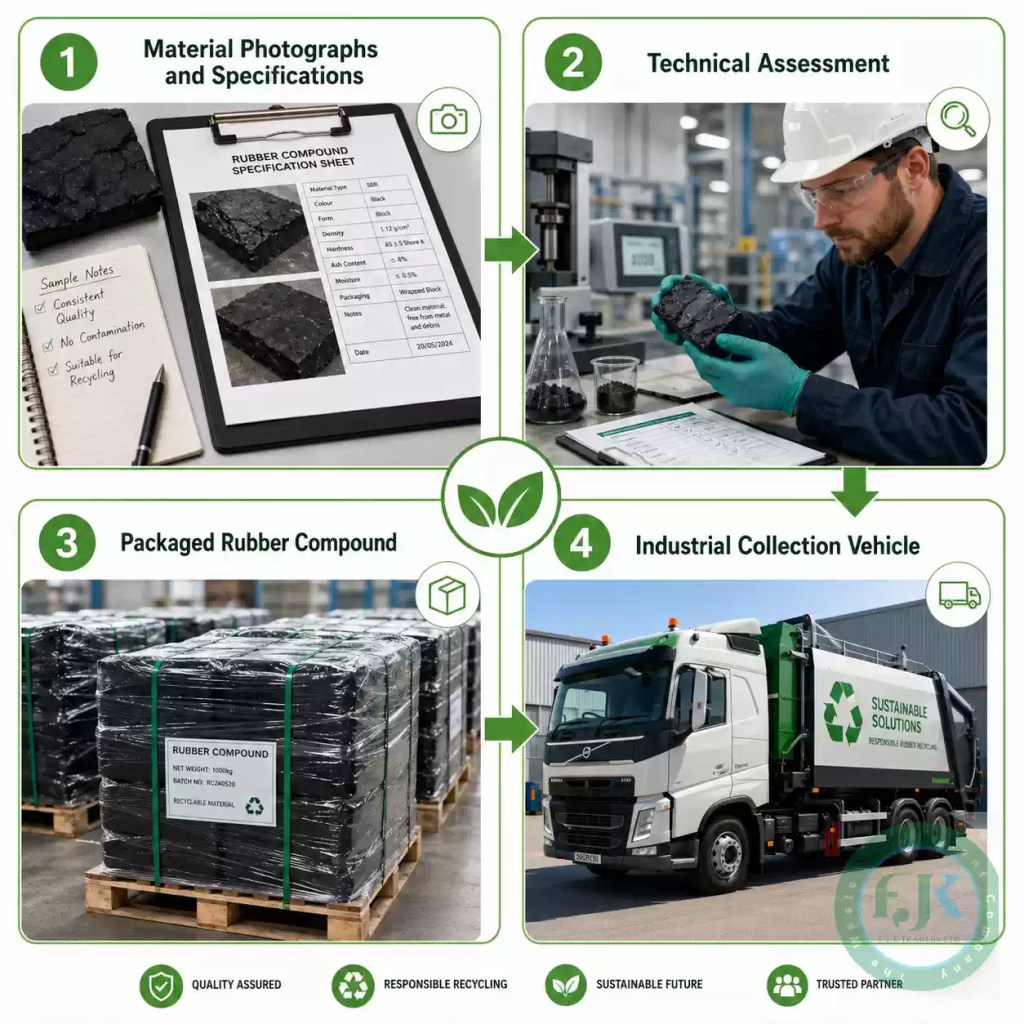
1. Send the Material Details
Begin by providing:
- Company name
- Collection address
- Material description
- Approximate quantity
- Packaging method
- Photographs
- Material specification
- Production date, if known
- Storage history
- Frequency of availability
This allows us to complete an initial review before discussing collection arrangements
2. Confirm Whether the Rubber Is Cured or Uncured
This distinction is important.
Unvulcanised rubber has not completed the curing process, while vulcanised rubber has already developed its final cross-linked structure. The two materials usually require different handling and recovery routes.
State clearly whether the material is:
- Fully uncured
- Partially cured
- Scorched
- Fully vulcanised
- Unknown
Where the condition is uncertain, provide a technical data sheet or sample information.
3. Review Composition and Contamination
We may request information regarding:
- Natural or synthetic rubber content
- Polymer type
- Carbon black
- Silica
- Oils
- Sulphur
- Accelerators
- Fillers
- Pigments
- Textile content
- Metal content
- Foreign contamination
Do not describe mixed factory material as clean compound when it contains packaging, timber, plastic, floor debris, water, oil or other waste.
4. Assess Quantity and Packaging
Commercial quantities are generally easier to evaluate when they are safely packaged and accurately weighed.
Typical units may include:
- Kilograms
- Tonnes
- Pallets
- Bales
- Boxes
- Bulk bags
- Full vehicle loads
- Container quantities
Advise whether the waste is available as a one-off load or as a recurring monthly production stream.
5. Identify a Suitable Route
Depending on the material, possible routes may include:
- Direct industrial reuse
- Reprocessing
- Controlled blending
- Material recovery
- Specialist recycling
- Alternative manufacturing use
- Authorised treatment
- Responsible disposal where recovery is not viable
No particular route can be guaranteed until the material has been assessed.
6. Coordinate Collection or Onward Movement
Where a suitable route is available, collection requirements can be reviewed according to:
- Material quantity
- Loading facilities
- Vehicle access
- Packaging
- Collection country
- Documentation
- Transport requirements
- Destination acceptance criteria
All arrangements remain subject to commercial agreement and applicable waste controls.
What Information Should You Send?
To receive a faster assessment, include the following information in your first enquiry.
Required information
- Material name
State the trade name or internal description. - Rubber type
For example, natural rubber, SBR, EPDM, NBR, butyl, silicone or mixed compound. - Cure condition
Confirm whether it is unvulcanised, partially cured or fully cured. - Quantity available
Provide the estimated net weight. - Material form
Sheets, slabs, strips, bales, bags, pallets or loose material. - Collection location
Include the country, city and postcode. - Photographs
Supply clear photographs of both the material and packaging. - Technical documentation
Include a specification, material data sheet or safety data sheet where available. - Contamination details
Declare all foreign materials and contamination. - Availability
Confirm whether it is a one-off quantity or recurring waste.
Recommended website upload fields
Your enquiry form should include:
- Upload material photographs
- Upload specification
- Upload safety data sheet
- Quantity and unit
- Material condition
- Collection postcode
- Preferred collection date
Why Manufacturers Choose FJK Traders Ltd
Specialist Industrial Focus
Our service is focused on commercial and industrial waste materials rather than domestic rubbish collection.
This helps us understand the information manufacturers need to provide when offering technical rubber waste.
Material-Led Assessment
We review the material before proposing a route. This prevents unsuitable waste from being sent to an incorrect facility and reduces avoidable transport or rejection costs.
Support for One-Off and Recurring Waste
We consider:
- Factory clearances
- Warehouse surplus
- Rejected batches
- Production waste
- Recurring monthly material
- Full-load quantities
- Redundant stock
Collection and Recovery Coordination
Where a suitable destination is identified, we help coordinate the commercial and logistical requirements for onward movement.
Registered Waste Activity
FJK Traders Ltd holds an upper-tier waste carrier, broker and dealer registration in England according to the registration documentation supplied by the company.
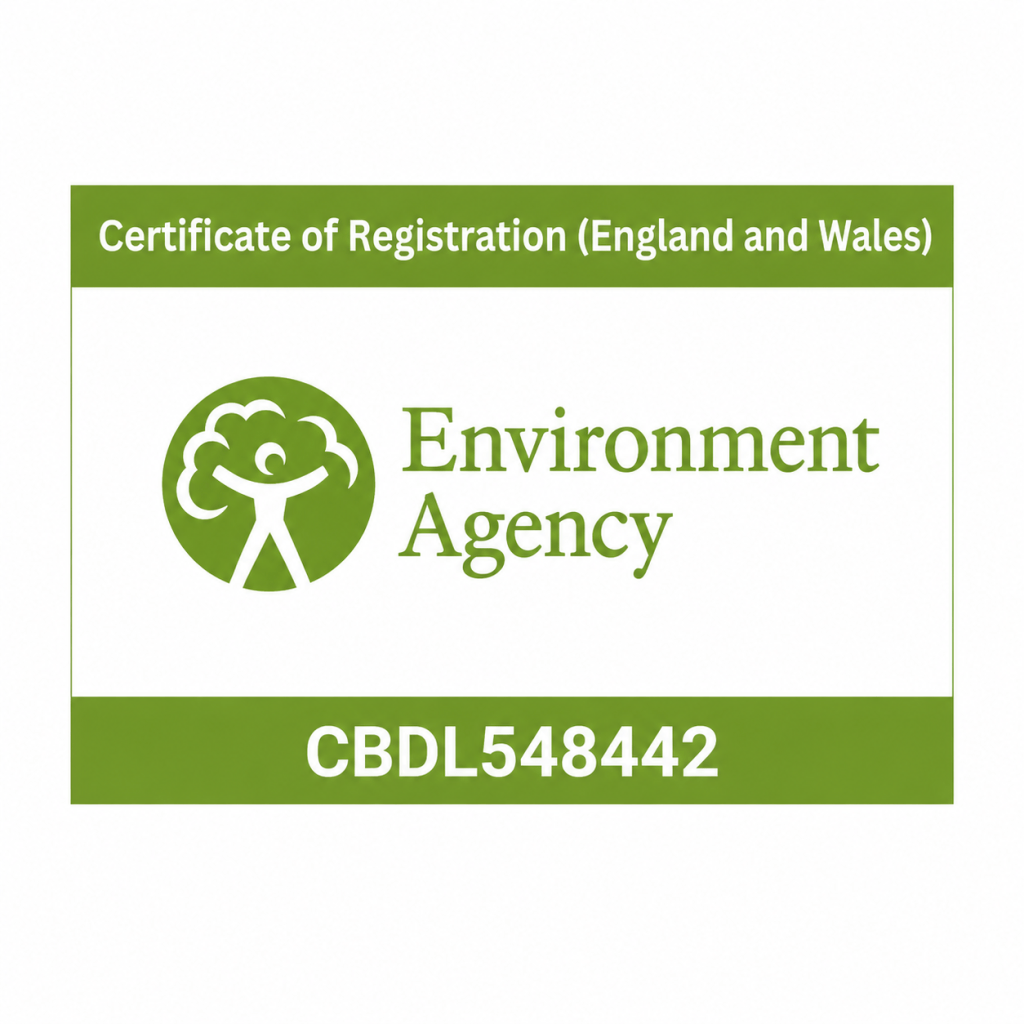
The Environment Agency public register allows businesses to check whether a carrier, broker or dealer is registered. Upper-tier registrations are normally renewed periodically, and businesses transferring waste remain responsible for checking the recipient’s authorisation and accurately describing the waste.
Benefits of Recovering Unvulcanised Rubber Compound
Reduce Material Sent for Final Disposal
Suitable rubber compound may have potential for reuse or recovery rather than being treated immediately as material for final disposal.
Recover Value from Surplus Stock
Unused, off-spec or redundant compound may retain commercial or manufacturing value when it is properly identified and matched with an appropriate outlet.
Free Valuable Factory Space
Accumulated rubber compound can occupy:
- Production areas
- Warehouses
- Loading bays
- External storage
- Pallet spaces
- Quarantine areas
A planned collection can help release operational storage capacity.
Improve Waste Segregation
Keeping clean uncured compound separate from general factory waste may improve its recovery potential.
Do not mix it with:
- General rubbish
- Oils
- Solvents
- Cured rubber
- Wood
- Plastic packaging
- Metal waste
- Wet material
- Hazardous substances
Support Documented Waste Management
Commercial waste producers have a duty of care to ensure that waste is described accurately, transferred to an appropriately authorised party and supported by the required documentation. A waste transfer note or equivalent record may be used for non-hazardous commercial waste.
Common Reasons Rubber Compound Is Rejected
Rubber compound can become off-spec or redundant for many reasons.
Incorrect Formulation
A mixing error may affect the polymer, filler, oil, pigment, sulphur or additive ratio.
Failed Quality Testing
The material may fail:
- Viscosity testing
- Hardness targets
- Cure-time testing
- Tensile requirements
- Colour specification
- Adhesion testing
- Customer approval
Scorching or Partial Cure
Excess heat during processing or storage may cause premature curing, reducing the compound’s suitability for its original purpose.
Contamination
The material may contain metal, textile, plastic, oil, moisture or another rubber grade.
Commercial Redundancy
A technically usable compound can become redundant after a product line ends or a customer order is cancelled.
Shelf-Life or Storage Issues
Age, heat, moisture or poor storage conditions may affect compound performance.
State the exact reason for rejection when submitting the material.
UK and European Enquiries
FJK Traders Ltd primarily operates from the United Kingdom and considers industrial material enquiries from the UK and selected European locations, including:
- Germany
- Italy
- Spain
- The Netherlands
International collection is not automatic. Cross-border movements depend on material classification, quantity, destination acceptance, transport arrangements and applicable waste-shipment controls.
For European enquiries, provide:
- Full collection address
- Country of origin
- Material description
- Waste classification, where known
- Quantity
- Packaging
- Photographs
- Proposed collection timing
Materials That May Not Be Accepted
A material may be unsuitable when it is:
- Unidentified
- Incorrectly described
- Heavily contaminated
- Mixed with general rubbish
- Water-damaged
- Loose and unsafe to load
- Available in an uneconomic quantity
- Classified as hazardous without suitable arrangements
- Mixed with incompatible rubber grades
- Unsupported by required documentation
- Rejected by the proposed receiving facility
Where a recovery route is unavailable, the waste producer remains responsible for arranging an appropriate authorised alternative.
Request an Uncured Rubber Compound Assessment
Are you holding unwanted, surplus or off-spec rubber compound?
Send FJK Traders Ltd the following:
- Material photographs
- Technical specification
- Approximate weight
- Packaging details
- Collection postcode
- Reason for rejection
- One-off or recurring availability
Our team will review the information and advise whether a suitable collection, reuse, recovery or onward-processing option may be available.
Frequently Asked Questions
What is unvulcanised rubber compound waste?
Unvulcanised rubber compound waste is mixed rubber material that has not completed the curing or vulcanisation process. It may include surplus batches, production trim, rejected compound, sheets, slabs, strips or redundant factory stock.
Can uncured rubber compound be recycled?
Some uncured compound may be suitable for reprocessing, blending, reuse or specialist recovery. Suitability depends on its formulation, age, condition, contamination and available quantity.
Do you collect off-spec rubber compound?
FJK Traders Ltd considers enquiries involving off-spec rubber compound. Collection is subject to material assessment, quantity, location, packaging and the availability of a suitable destination.
What quantities of rubber compound can be assessed?
Both one-off and recurring commercial quantities can be submitted for review. Provide the total weight, number of pallets or bales, and expected frequency.
What photographs should I send?
Send clear images of the material, packaging, labels, pallets, storage condition and any visible contamination.
Can you handle expired rubber compound?
Expired or redundant stock may be assessed, but the production date, shelf life, storage history and technical specification should be provided.
Do you accept mixed rubber waste?
Mixed material requires additional review. Identify every known rubber grade and disclose any cured rubber, textile, metal, oil, water, plastic or general waste contamination.
Is the material purchased or collected free of charge?
Commercial terms depend on material quality, quantity, location, transport costs and available recovery value. No purchase, free collection or paid collection arrangement should be promised before assessment.
Do you provide collection outside the UK?
Selected European enquiries may be considered. International movements remain subject to legal, logistical and destination requirements.
What documents are required?
Documentation may include a material specification, safety data sheet, waste description, photographs, weight information and the appropriate waste-transfer or movement records.

